


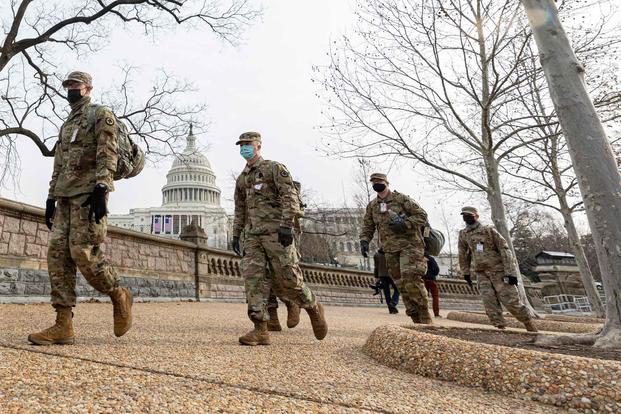
When crises call for immediate action, what guardrails protect American citizens from overreach?
PRAY FIRST for God to direct our leaders and for them to use wise restraint in their decision-making.
He has told you, O man, what is good; and what does the Lord require of you but to do justice, and to love kindness, and to walk humbly with your God? Micah 6:8
In Part 1 (Read here: Emergency Powers and Guarding Liberty), we explored what emergency powers are and the constitutional safeguards designed to keep liberty secure. Now, in Part 2, we turn from definition to application, examining how these powers are exercised when crises hit. When emergencies strike, the choices leaders make reverberate far beyond the moment. Even necessary actions carry weight, which is why temporary powers must be used with clarity, restraint, and honesty. Crises test more than an administration’s technical readiness; they test the nation’s character and its commitment to governing with integrity.
Civil Liberties and Public Trust
Every crisis places pressure on rights that people normally take for granted. Limits on travel, temporary restrictions on gatherings, or quarantine orders all touch daily life in personal ways. For that reason, the standard for such actions must remain high. Research underscores that emergency restrictions should stay proportional, grounded in evidence, and no broader than the situation demands. Courts have long affirmed that executives may act quickly in urgent conditions, yet constitutional protections do not evaporate during emergencies. Judicial review continues to provide a vital backstop.
How leaders communicate these decisions matters just as much as the decisions themselves. Public trust tends to swing sharply in uncertain seasons—rising with transparency and falling when people feel shut out of the reasoning. When officials explain the legal basis for their actions, share the data behind them, and lay out clear timelines for when restrictions will end, communities respond with greater cooperation and less fear. This steadiness reduces the need for harsh enforcement and strengthens the sense that the government is acting with the people, not merely over them.
Attention to fairness also matters. Emergency policies can unintentionally create uneven burdens. Families with limited transportation, communities with fewer health resources, or neighborhoods with inconsistent internet access all feel the strain more intensely. Reviews by the National Academies warn that unless governments intentionally design crisis measures with accessibility in mind, inequities increase. Practical steps such as multilingual alerts, mobile health units, community partnerships help ensure that no group assumes more than others simply because of circumstance.
Coordination Across Levels of Government
Emergencies never confine themselves neatly to jurisdictional boundaries. They require cooperation among federal agencies, states, and local leaders, each carrying responsibilities suited to their reach. The federal government provides nationwide coordination, funding, and operational strength. States and “localities” adapt those resources to their communities’ specific needs. Frameworks like the National Response Framework and the National Incident Management System (NIMS) give agencies a shared vocabulary and structure for working together without erasing local judgment (Federal Emergency Management Agency.
Smooth coordination does not happen spontaneously. It grows out of preparation, shared planning, and relationships built long before the crisis. Analysis by the National Academies and RAND finds that joint exercises, compatible communication networks, and mutual aid agreements dramatically reduce friction during real emergencies. Still, cooperation should never become a pretext for consolidating authority in ways that sideline local communities. Healthy partnership leaves room for local leaders to respond to their people’s needs while benefiting from national support.
Federal Action This Year
In 2025, examples of federal emergency action include President Donald Trump signed Executive Order 14156, which declared a National Energy Emergency. This declaration invoked the National Emergencies Act (NEA) and unlocked a wide range of statutory authorities designed to accelerate domestic energy production. By framing energy supply as a national crisis, the administration broadened the scope of what qualifies as an emergency, moving beyond traditional threats like war or terrorism into economic and industrial domains.
The order enabled agencies to use powerful tools such as the Defense Production Act, which allows the government to direct private industry to prioritize contracts for national defense and infrastructure. It also authorized the use of eminent domain to seize land for energy projects and streamlined emergency permitting to bypass lengthy regulatory processes. These measures were intended to fast-track energy development, but they also raised concerns about property rights, environmental protections, and the balance of power between the executive branch and Congress.
At the same time, the broader landscape of emergency powers remains largely unchanged. The United States currently has 90 declared national emergencies, with 48 still active, many of which are renewed annually without significant congressional debate. This pattern illustrates how emergency declarations often evolve into long-term governance tools rather than temporary crisis responses.
The expansion of emergency authority carries both practical benefits and risks. On one hand, it allows the government to respond quickly to perceived crises, mobilizing industry and infrastructure at unprecedented speed. On the other hand, it raises concerns about executive overreach, democratic accountability, and the precedent of declaring emergencies for economic or industrial challenges.
Preparing for the Future
Looking ahead, the country faces a dual challenge: improving emergency readiness while maintaining meaningful checks on power. One promising reform is sharpening the legal bounds of emergency authority. Congress can require automatic legislative review triggers, clearer statutory definitions, and public reporting on spending or actions taken during an emergency. Such measures keep unusual powers from drifting into normal life without reflection or consent.
Strong emergency response also depends on practical readiness: clear plans, reliable information-sharing, and enough backup personnel to handle sudden pressure without relying on expansive authority. Better preparation reduces the temptation to stretch authority when pressure rises.
Technology can help, though it raises new questions. Forecasting tools and real-time data can sharpen responses, but any use of predictive technologies during emergencies must be transparent, privacy-conscious, and monitored by independent oversight to prevent bias or misuse.
Recent crises offer valuable lessons. Following COVID-19, national reviews called for stronger public health systems, clearer federal–state roles, and more consistent communication—reforms meant not only to improve efficiency but to reduce the need for sweeping emergency powers in the first place. Preparedness, in this sense, is about stewardship: shaping institutions that can act decisively without compromising the liberties that sustain community life.
Why It Matters and How We Can Respond
Emergencies will come and go, but the habits formed during them often linger. If power expands too easily in a crisis, it can stay expanded long after the danger fades. Also, if public trust fractures in those moments, rebuilding it becomes harder with each passing year.
The stakes are both civic and spiritual. Scripture calls us to pray “for kings and all who are in high positions” so that communities may live in “peaceful and quiet lives” marked by dignity (1 Timothy 2:1–2). That peace depends not only on strong leadership but on leadership that resists the pull toward excess. Crisis response should honor human dignity, protect the vulnerable, and remain anchored in truth—qualities that reflect God’s heart for those entrusted with authority.
We can also model a different way of engaging public life. Instead of reacting with panic or cynicism, we can practice steady discernment, ask honest questions, seek reliable information, and speak with grace even when disagreements run deep. The Lord “gives wisdom” to those who ask (Proverbs 2:6). In a world wired for outrage, wisdom becomes an act of service—a way of caring for our neighbors by resisting fear and keeping watch over the institutions that shape our common life.
HOW THEN SHOULD WE PRAY:
— Pray for clarity and integrity in public communication between our nation’s leaders and American citizens. Do nothing from selfish ambition or conceit, but in humility count others more significant than yourselves. Philippians 2:3
— Pray for God to work through our elected officials to protect and aid the vulnerable and those in need during times of crisis. Put on then, as God’s chosen ones, holy and beloved, compassionate hearts, kindness, humility, meekness, and patience. Colossians 3:12
CONSIDER THESE ITEMS FOR PRAYER:
- Pray for courage among legislators and judges to uphold limits when expedience tempts overreach.
- Pray for local leaders and first responders to receive resources and wisdom to meet urgent needs.
- Pray for citizens to practice discernment and patience, supporting lawful measures that protect people without enabling abuse.
Sources: The White House, Congressional Black Caucus Foundation, Columbia School of Law, Brennan Center for Justice, Congress.gov, Department of Energy, Congressional Research Service, Federal Emergency Management Agency, RAND Corporation, Centers for Disease Control and Prevention, Pew Research Center
RECENT PRAYER UPDATES